search catalogue
catalogue

Multidialectal lexical documentation of Yaminahua, Nahua, and Sharanahua
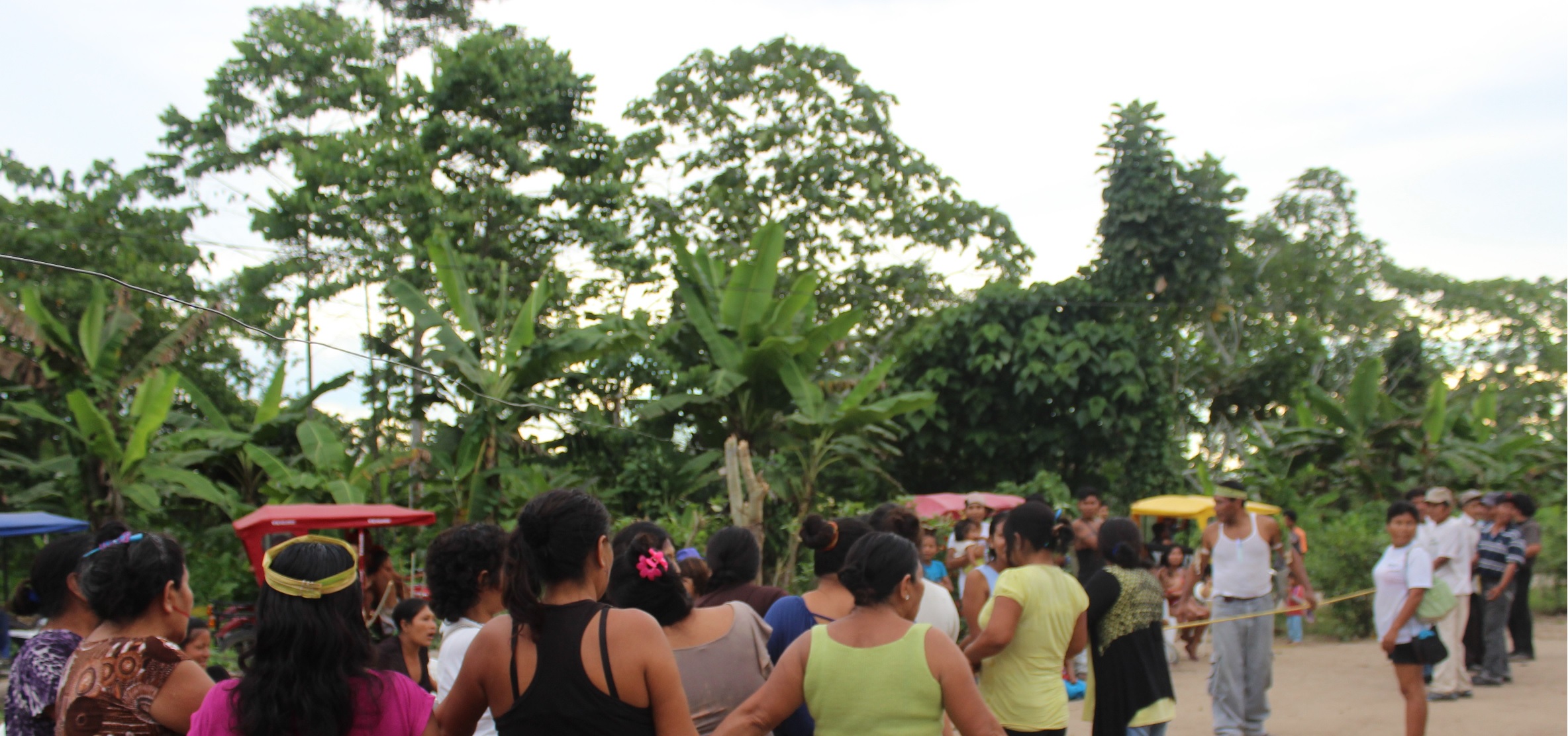
Landing page image for the collection "Multidialectal lexical documentation of Yaminahua, Nahua, and Sharanahua"

Yaminahua community members celebrate the final day of an alphabet workshop in 2016. Photo by Kelsey Neely. Click on image to access collection.

Language Yaminahua (ISO639-3:yaa), Nahua (ISO639-3:mts), Sharanahua (ISO639-3:mcd)
Depositor Kelsey Caitlyn Neely
Affiliation University of Texas at Austin
Location Peru
Collection ID 0605
Grant ID IPF0308
Funding Body ELDP
Collection Status Collection online
Landing Page Handle http://hdl.handle.net/2196/0fef926e-01e8-4f44-910f-371fb5905ff7


Summary of the collection

English: Yaminahua, Nahua, and Sharanahua are three closely-related Panoan languages spoken in the Peruvian Amazon. This collection investigates phonetic, phonological, morphological, and lexical variation among speakers in different communities in Peru. This collection also documents the oral histories, cultural practices, and linguistic attitudes of Yaminahua, Nahua, and Sharanahua speakers in Peru.

Resumen de la colección
Español: El yaminahua, el nahua y el sharanahua son tres lenguas pano estrechamente emparentadas que se hablan en la Amazonia peruana. Esta colección investiga la variación fonética, fonológica, morfológica y léxica entre los hablantes de diferentes comunidades de Perú. Esta colección también documenta las historias orales, las prácticas culturales y las actitudes lingüísticas de los hablantes de yaminahua, nahua y sharanahua en Perú.


Group represented

English: This collection focuses on speakers of Yaminahua, Nahua, and Sharanahua in Peru. There are also Yaminahua (alternatively Yaminawa or Jaminawa) speakers in Bolivia and Brazil, but these varieties are not included in this collection. Specifically, this collection documents the varieties of Yaminahua spoken on the Yurúa and Sepahua rivers, Nahua spoken on the Mishahua river and in the town of Sepahua, and Sharanahua as spoken on the upper Purús river in Peru and in the city of Pucallpa.

Grupo representado
Español: Esta colección se centra en los hablantes de las variedades yaminahua, nahua y sharanahua en Perú. También hay hablantes de yaminahua (alternativamente yaminawa o jaminawa) en Bolivia y Brasil, pero estas variedades no están incluidas en esta colección. En concreto, esta colección documenta las variedades del yaminahua habladas en los ríos Yurúa y Sepahua, el nahua hablado en el río Mishahua y en la ciudad de Sepahua, y el sharanahua hablado en la parte alta del río Purús en Perú y en la ciudad de Pucallpa.


Language information

English: Yaminahua (ISO: yaa), Nahua (ISO: mts), and Sharanahua (ISO: mcd) are Panoan languages of Peruvian Amazonia. These closely-related languages form part of a dialect complex that extends across eastern Ucayali region in Peru northward to Acre state in Brazil.

In Peru, Yaminahua is spoken primarily by speakers on the Yurúa, Sepahua, and Inuya rivers, as well as by some speakers living along highway 18C outside the city of Pucallpa. Yaminahua, sometimes spelled Yaminawa or Jaminawá, is also spoken in communities in Bolivia and Brazil. This collection recognizes the Sepahua river variety and the Yuruá river variety as distinct linguistic communities, identified as Sepahua Yaminahua and Yuruá Yaminahua respectively.
Nahua, also known as Yora, is spoken primarily in a single community on the Mishahua (also spelled Mishagua) river near the border of the Cusco and Ucayali regions of Peru. There is also a significant population of Nahua speakers in the town of Sepahua on the Sepahua river in Ucayali region. Sharanahua is spoken primarily by speakers living in communities on the upper Purús river and its affluents in Ucayali region, but there are also many speakers living in the regional capital of Pucallpa.

Información lingüística
Español: El yaminahua (ISO: yaa), el nahua (ISO: mts) y el sharanahua (ISO: mcd) son lenguas pano de la Amazonia peruana. Estas lenguas, estrechamente relacionadas entre sí, forman parte de un complejo dialectal que se extiende por la región oriental de Ucayali, en Perú, hacia el norte, hasta el estado de Acre, en Brasil.
En Perú, el yaminahua es hablado principalmente por los hablantes de los ríos Yurúa, Sepahua e Inuya, así como por algunos hablantes que viven a lo largo de la carretera 18C en las afueras de la ciudad de Pucallpa. El yaminahua, a veces deletreado yaminawa o jaminawá, también se habla en comunidades de Bolivia y Brasil. Esta colección reconoce la variedad del rió Sepahua y la variedad del río Yuruá como comunidades lingüísticas distintas, identificadas como yaminahua de Sepahua y yaminahua de Yuruá respectivamente.
El nahua, también conocido como yora, se habla principalmente en una sola comunidad en el río Mishahua (también escrito Mishagua) cerca de la frontera de las regiones de Cusco y Ucayali en Perú. También hay una importante población de hablantes de nahua en la ciudad de Sepahua, en el río Sepahua, en la región de Ucayali. El Sharanahua es hablado principalmente por los hablantes que viven en las comunidades de la parte alta del río Purús y sus afluentes en la región de Ucayali, pero también hay muchos hablantes que viven en la capital regional de Pucallpa.


Special characteristics

English: This deposit is a multi-lingual/multi-dialectal deposit.

Características especiales
Español: Este depósito es multilingüe y multidialectal.


Collection contents

English: This collection consists primarily of audio and video recordings and accompanying annotations.

Contenido de la colección
Español: Esta colección se compone principalmente de grabaciones de audio y vídeo y de las anotaciones que las acompañan.


Acknowledgement and citation

English: Users of any part of the collection should acknowledge Kelsey Neely as the data collector and researcher. Users should acknowledge the Endangered Languages Documentation Programme as the funder of the project. Individual speakers or other contributors whose words, images, transcriptions, translations, and/or other contributions are used should be acknowledged by name. All information on contributors and their roles is available in the metadata.
To refer to any data from the collection, please cite as follows:

Neely, Kelsey. 2019. Multidialectal lexical documentation of Yaminahua, Nahua, and Sharanahua. Endangered Languages Archive. Handle: http://hdl.handle.net/2196/00-0000-0000-0014-09E9-E. Accessed on [insert date here].


Agradecimientos y citas
Español: Los usuarios de cualquier parte de la colección deben reconocer a Kelsey Neely como la recopiladora de datos e investigadora. Los usuarios deben reconocer al Programa de Documentación de Lenguas en Peligro como organismo de financiación del proyecto. Los hablantes individuales u otros colaboradores cuyas palabras, imágenes, transcripciones, traducciones y/u otras contribuciones se utilicen deben ser reconocidos por su nombre. Toda la información sobre los colaboradores y sus funciones están disponibles en los metadatos.
Para referirse a cualquier dato de la colección, por favor cite de la siguiente manera:
Neely, Kelsey. 2019. Multidialectal lexical documentation of Yaminahua, Nahua, and Sharanahua. Endangered Languages Archive. Handle: http://hdl.handle.net/2196/00-0000-0000-0014-09E9-E. Consultado el [insertar fecha aquí].


Powered by Preservica
© Copyright 2025